Instant luchador identity
Distinctive masks, colors, and names made each luchador immediately recognizable.
The League
LLUSA blended Mexican lucha libre tradition with American television storytelling, bringing masks, factions, rivalries, and high-flying action to viewers across the United States.
The format
Masked Warriors gave American audiences a luchador-first gateway into lucha libre: heroic tecnicos, rule-breaking rudos, colorful factions, masks, rivalries, and high-speed ring action.
Distinctive masks, colors, and names made each luchador immediately recognizable.
Heroic tecnicos and rule-breaking rudos gave every rivalry clear emotional stakes.
Aerial moves, rapid tags, and dramatic matchups gave the series its unmistakable pace.
Series history
Seasons
Season 1 introduced the league in seven episodes. Season 2 added thirteen more, while six completed Season 3 episodes remain unreleased.
Live events
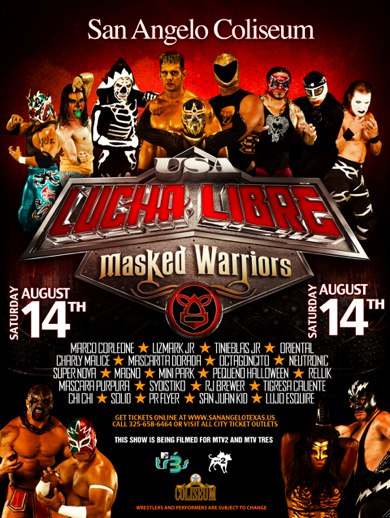
Original posters, tour footage, and local coverage show how Masked Warriors expanded from television into live events, community appearances, and sponsor activations.
Broadcast history
The series launched on MTV2, reached Latino audiences through Tr3s, and later appeared in announced Hulu Latino and Hulu Plus distribution plans. Together, those platforms introduced Masked Warriors to broadcast, Latino, and on-demand audiences.
Tour energy
Event material from cities like San Angelo and Las Vegas shows how the brand translated beyond television into marketable live entertainment, families, talent appearances, and local press.
Keep exploring
Start with an episode, meet the tecnicos and rudos in the roster, then explore the national coverage and live-event history behind the series.